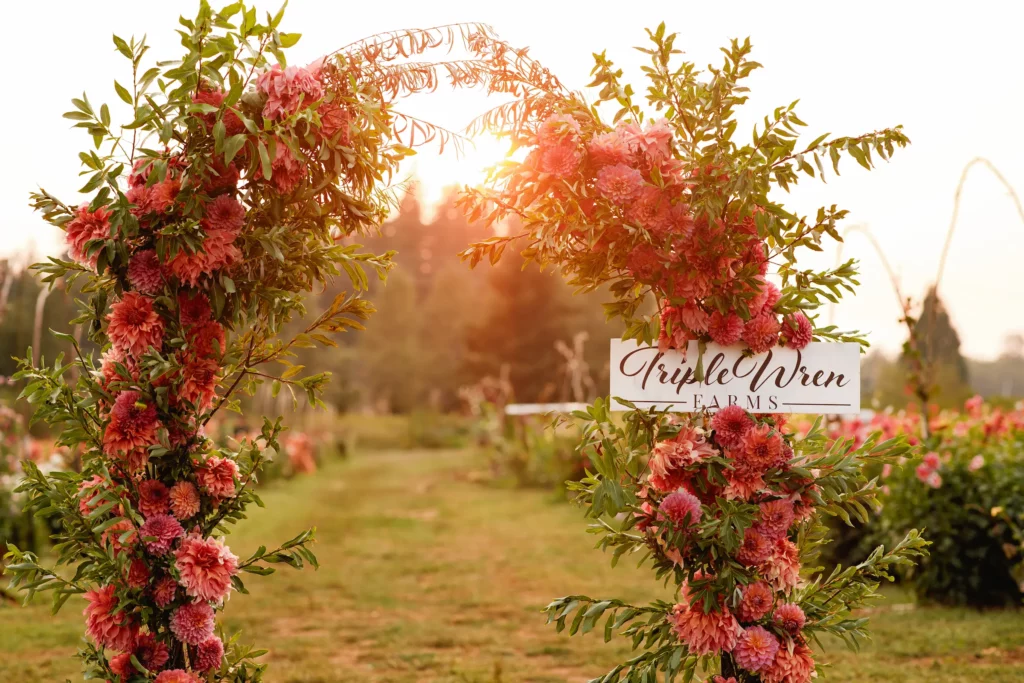
At Triple Wren, we plant thousands of dahlia plants in the ground each year. Despite our long rows and larger scale production, we still plant every tuber and rooted cutting by hand!
We check every plant for pest damage and disease on a two-week rotation throughout the season. We weed manually and monitor for soil moisture, nutritional deficiencies, and general health at both foliage/bloom and soil level. Our team cares for our dahlia plants like a loving home gardener does: on a personal, up-close basis.
This article explains how we plan for success by managing our dahlia fields to PREVENT pest and disease infestations. If you’re looking for a specific solution, you can scroll to the last section of this article for our best tips for specific problems!
Soil Preparation is Key
First, we start each season with the healthiest, best-prepared soil possible so that the foundation we’re constructing for each year’s planting is as solid as possible. We create an environment that is friendly to dahlias’ specific needs and that is bursting with life to support their growth.
Remove Weed Pressure
Next, and this is absolutely key for us: we enter the growing season with a zero-tolerance policy for weeds in our dahlia beds and in our aisles/around our fields.
Weeds crowding your dahlia plantings will prevent the proper airflow they need to stay healthy. They also can harbor chewing and sucking pests that will quickly spread to your “delicious” dahlias. Proper airflow is also important to prevent powdery mildew.
Weed pressure and overgrown natural areas adjacent to your dahlia garden also gives rabbits and voles a habitat to hide in. Hawks, owls, and eagles are our allies at the farm in controlling these dahlia pests, but their efficacy is hindered by tall weeds, so we manage the areas around our fields diligently.
Create Bio-Diversity
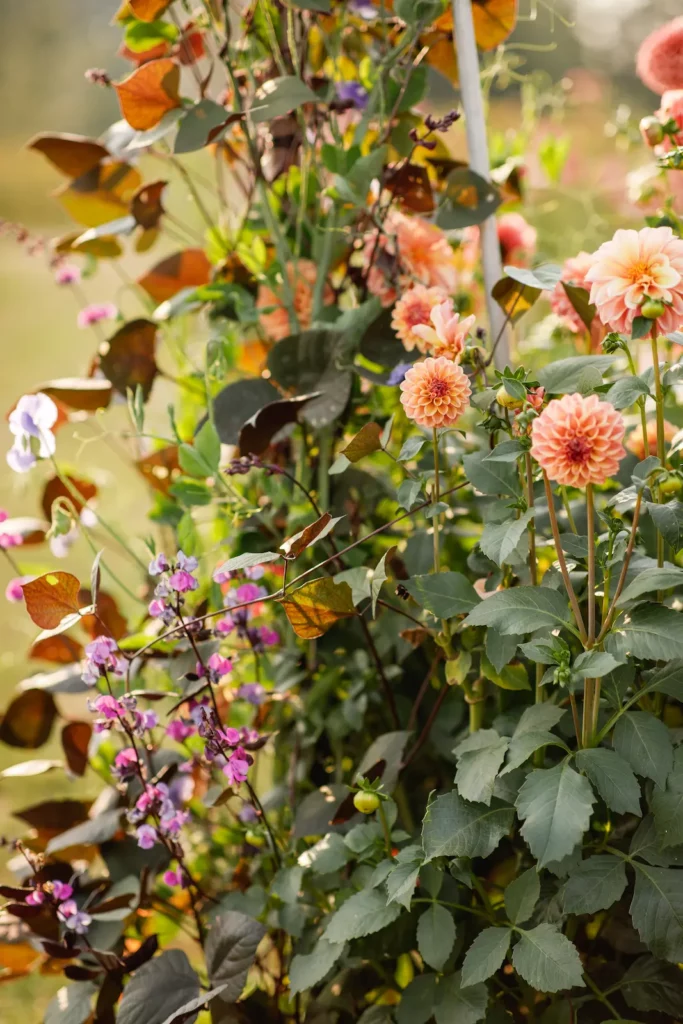
We choose to increase the biodiversity of our fields each year by interplanting annuals between each dahlia variety. This provides beneficial insects with a safe haven + quite a feast throughout the growing season.
Not only are these thousands of annual flowers beautiful, they also give us flower fillers at our fingertips when designing bouquets, make a really beautiful, inspiring, and interesting field, allow us to rotate where dahlias are planted within our fields from year to year. They also give us a “hard stop” between dahlia varieties at harvest time which helps keep us organized and efficient!
Invest Time Observing
The next pillar of our IPM involves observation. We carefully LOOK at our dahlia plants. Truly observing your garden is a learned skill, which takes patience and time.
Watch diligently for signs of deer, rabbits, slugs, voles, and other pests in your garden, as they enjoy feasting on the new sprouts, or even on the subterranean roots.
We spend time daily observing how they are growing, section by section. We recommend that a new dahlia grower spend about two hours/week in their garden observing both the plants and soil. This is a fantastic mindfulness activity, and will reap many rewards for pest management in your garden.
As you look at your dahlia plants, carefully examine for pests or pest damage.
Observe if leaves are stripped from the bottom (likely rabbits) of the dahlia stems, or if tips are nibbled from the top (probably deer).
Look for glistening slug trails in the early morning, underground tunnels mounding up your soil (voles/moles) and for rabbit pellet droppings to spy out signs of pests that are scouting for food or beginning to invade your garden.

Our Best Solutions to Specific Pest Problems
Rabbits
To deter rabbits, we suggest cage traps which will allow you to capture the bunnies. Talk with your local wildlife control office about the best places to release rabbits you capture. Or… (and I know this sounds weird), but most hunting stores sell bottle of coyote or cougar urine which hunters use to disguise their scent. Dripping a few drops on an old t-shirt and staking the t-shirt squares in your garden with shish-ka-bob skewers is a very effective way to deter rabbits from entering. The urine must be reapplied after rain.
Deer
We receive lots of questions about deer and dahlias. The truth is, deer are opportunistic and indiscriminate eaters. We have not had trouble with them invading our dahlias, but they certainly can if they decide it’s the easiest/tastiest treat around. The most effective deterrent for deer is a physical barrier, like a tall fence. You could also try the coyote or cougar urine around your garden for deer too, but your mileage may vary with that being effective.
Voles/Rodents
Voles are a more difficult pest to capture or deter, but if your dahlias are not growing well, you can determine whether these burrowing rodents are to blame by scouting for their tunnels and/or carefully digging up your tubers to look for teeth marks. If voles are indeed a problem for you in your home garden, we recommend contacting your local pest control service to discuss options.
Slugs
For slug control, we recommend Sluggo Plus sprinkled sparingly around your garden (For Canadian gardens we recommend Slug B Gone ECO). This also must be re-applied after rain.
Chewing Pests
As the season progresses, depending on your microclimate, you may notice chewing pests like caterpillars or beetles damaging your dahlias, or you might see small insects, like thrips, invading your plants and blooms. If you have kept weed pressure to a minimum, and if you have mulched your dahlias, you should see less insect damage, but pests can still attack your flower garden.
Depending on your personal comfort level, there are many products at your local Feed & Seed that can help you kill or deter these pests. You can use an OMRI-approved (organic) product like Safer Soap or Safer Brand Insecticidal Soap with Pyrethrin (made with chrysanthemum oils). These products are kinder to the environment, but still can harm pollinators, so we choose to target-spray on problem areas them just before dusk when most bees and wasps have gone to their homes and most moths are not yet active. You can also use more effective systemic, time-release products like BioAdvanced All in One Rose and Flower Care as a soil drench or in granulated form which eliminates the chance of spraying pollinators but makes your plants toxic to chewing and sucking bugs and triples as a fungicide and fertilizer. Here’s a link to our Amazon store with some of our recommended pest-prevention products.
Powdery Mildew
If you are struggling with powdery mildew in your garden, this post might be helpful for treatment now and prevention in future years.