For many years, Triple Wren Farms sold tens of thousands of cut dahlia stems each season.
In those days, our summer and early fall rhythm was built around harvest mornings, buckets of cold water, bunching stations, cooler space, wholesale orders, grocery deliveries, and the constant question of which dahlias were beautiful enough, productive enough, and sturdy enough to make sense as a market crop.
Today, we no longer sell cut flowers from our fields. Instead, our work is centered on growing and sharing dahlia tubers so that gardeners, flower farmers, designers, and market growers can grow beautiful dahlias in their own places.
But the years we spent selling stems taught us so much.
They taught us that not every beautiful dahlia is a good market dahlia. They taught us that a variety can be breathtaking in the field and still be difficult to bunch, fragile in transport, or awkward for a buyer who needs consistency. They taught us that strong stems, clean form, productivity, vase life, and uniform size matter just as much as color.
If you are choosing dahlias for market bouquets, farmstand sales, florist work, or local grocery accounts, we hope these years of experience help you choose varieties with more confidence.
What Makes a Dahlia Good for Market?
When we were growing dahlias for grocery and wholesale accounts, there were a few traits we looked for before a variety earned space in that program.
A good market dahlia needed to be:
- Productive enough to justify the bed space
- Strong-stemmed enough to harvest and bunch well
- Durable enough to handle post-harvest care and transport
- Consistent enough to make bunching efficient
- Beautiful enough to catch a customer’s eye
- Sized appropriately for the way we sold flowers
A dahlia can be a wonderful cut flower and still not be a great fit for every market channel. Large dinnerplate-style dahlias, for example, can be stunning in design work or event florals, but they are often more difficult to use in uniform grocery bunches. They take up more space, vary more dramatically in size, and can make a bucket feel uneven.
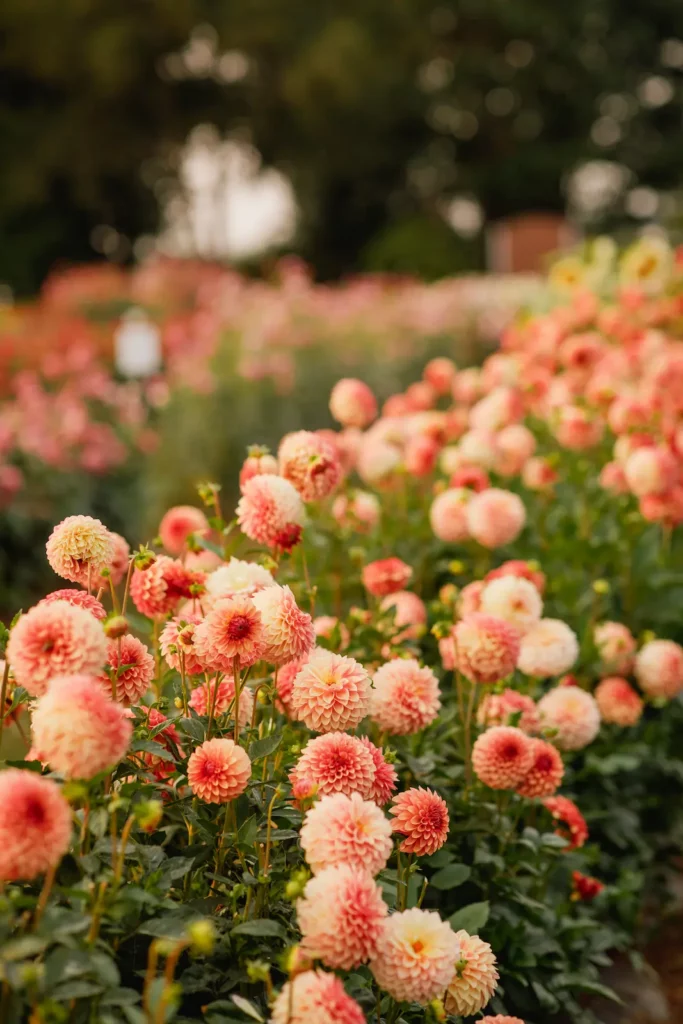
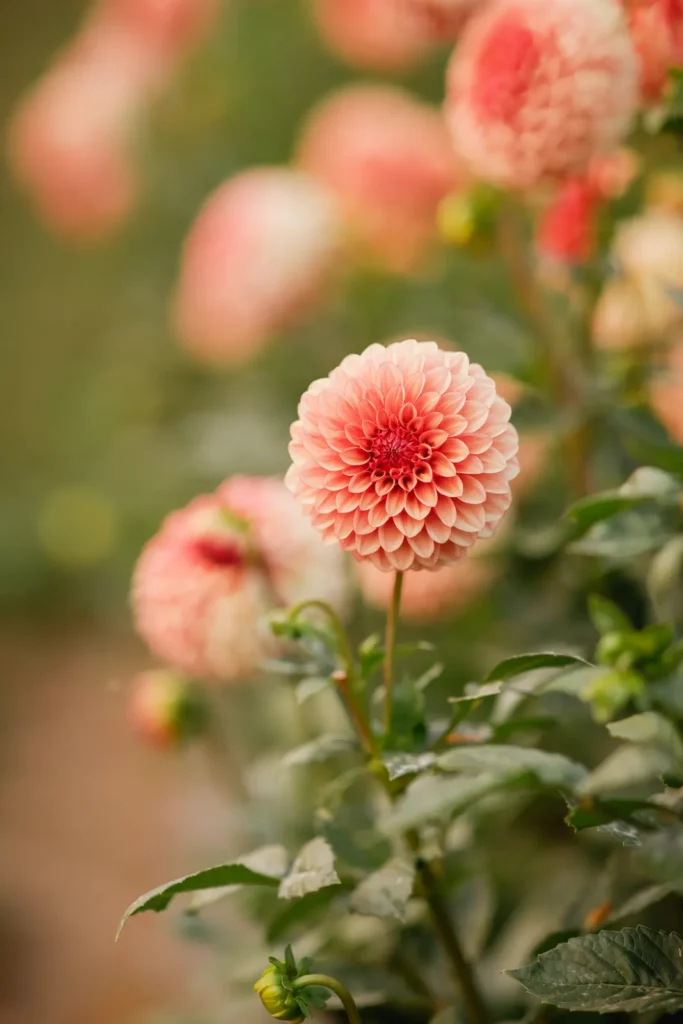
For our grocery work, we found that ball, pompon, and decorative forms were often the most reliable. Blooms in the 3.5 to 4 inch range were especially useful because they gave us a good balance of beauty, durability, and consistency.
That does not mean larger or more unusual dahlias are not worth growing. Some are spectacular and very much worth including in a cutting garden. But if you are growing for market, the question is not only, “Is this dahlia beautiful?” A better question is: “Will this dahlia help me build a beautiful, efficient, reliable product for the customer I am serving?”
Post-Harvest Care Matters
Dahlias are not a long-lasting flower in the same way that some other crops are. They are perishable, and they need thoughtful handling.
When we were selling cut stems at scale, our goal was to harvest them at their prime, cool them quickly, and keep them cool until they reached the customer. We learned that once dahlias were cut, temperature swings could quickly shorten their vase life.
Our basic rhythm looked like this:
- Water deeply the evening before harvest
- Harvest early in the morning while the field was still cool
- Cut directly into clean buckets with cold water
- Move buckets into the cooler as quickly as possible
- Condition flowers in the cooler before delivery or pickup
- Keep the cold chain as consistent as possible
In the early years, before we were moving too many flowers to handle ourselves, we delivered buckets out of the back of our station wagon, and later our old pickup truck (with a topper!). We often transported flowers in the dark or very early in the morning, simply because keeping them cool made such a difference.
As the business grew, we eventually worked with refrigerated logistics providers. That was not because it was glamorous. It was because consistency mattered, and the flowers told us the truth.
Warm flowers that were cooled, warmed again, and then re-cooled did not hold as well. Flowers that stayed cold and hydrated performed better. Over time, that became one of the quiet standards behind our product.
Whether you are selling ten bunches at a farmstand or hundreds of bunches to buyers, that principle still matters. Harvest at the right stage. Keep buckets clean. Hydrate well. Cool quickly if you can. Pay attention to what happens after the flowers leave your field.
The beauty of the bloom matters, and the experience after purchase is incredibly important.
Think About the Buyer You Are Serving
One of the biggest lessons we learned from selling dahlias at scale was that the right variety depends partly on the market.
A florist may want unusual color, movement, nuance, and a few larger statement blooms.
A farmstand customer may be drawn to cheerful color, lush bunches, and a sense of abundance.
A grocery buyer may care deeply about consistency, packaging, bucket count, bunch size, barcodes, and delivery timing.
None of those customers are wrong. They simply need different things.
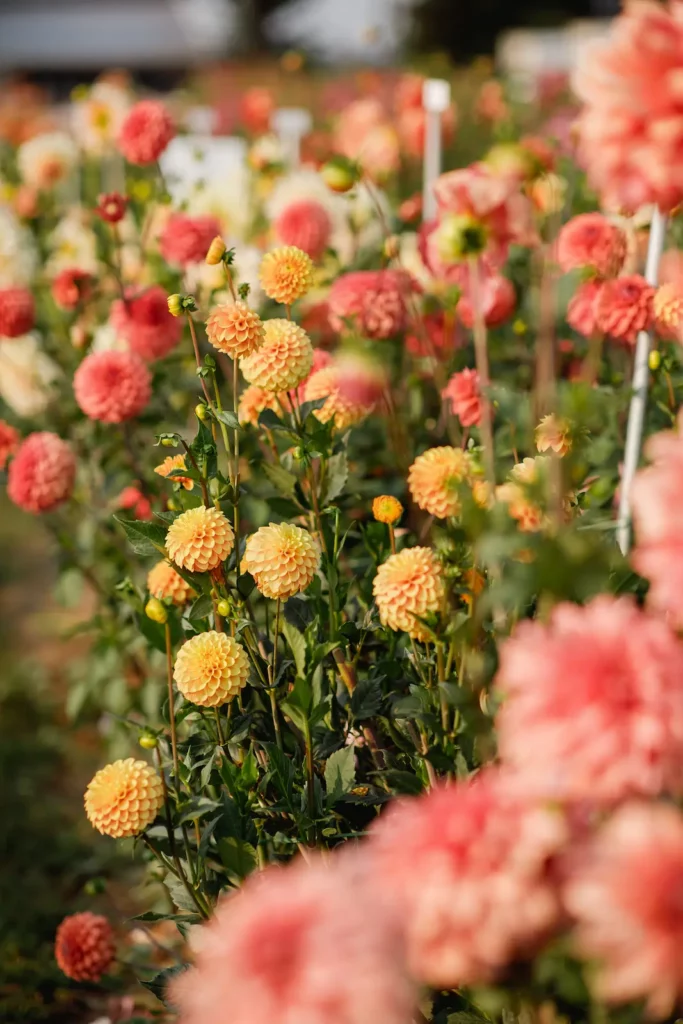
When we sold grocery bunches, we eventually simplified our systems because too much customization made the work harder than it needed to be. We offered a standard bucket count, trained our crew to bunch with consistent height and heft, and worked to make each delivery feel reliable.
That kind of consistency is easy to underestimate when you are standing in a beautiful field. But buyers and customers notice it.
If you are building a market dahlia program, take a little time to think through the full path of the flower:
- How will it be harvested?
- How will it be bunched?
- How many stems belong in each bunch?
- How will it be transported?
- How will the buyer display it?
- What does the customer expect when they get it home?
Those questions may not feel as exciting as choosing colors, but they will shape whether your dahlia crop is enjoyable and profitable to sell.
Our Favorite Dahlia Traits for Market Growers
Over the years, we came to especially appreciate varieties with:
- Strong, usable stems
- Consistent bloom size
- Good productivity
- Durable petals
- Clear, appealing color
- Forms that bunch easily
- Reliable performance across the season
We also learned to value dahlias that could carry a color category well. If you are selling mixed bouquets, you do not need every variety in the world. You need a useful palette. You need dependable whites and creams, warm peaches and corals, strong pinks, cheerful yellows, rich reds, and a few moody colors that make arrangements feel special.
A well-chosen collection of dependable dahlias can often serve you better than a huge planting of varieties that are individually exciting but inconsistent in the bucket.
Dahlia Varieties We Have Loved for Market Work
Every farm is different. Climate, soil, spacing, fertility, harvest rhythm, and customer base all shape how a variety performs. A dahlia that thrives for us may behave differently somewhere else, and availability also changes from season to season.
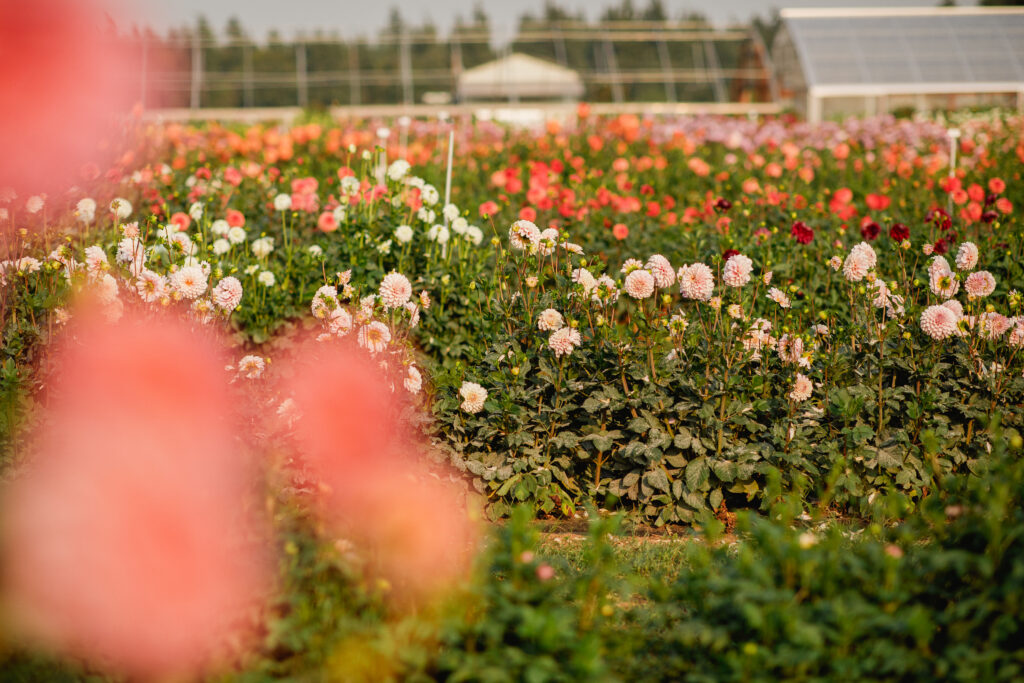
Pink, Coral, and Rose
These colors are always useful. They can feel romantic, cheerful, soft, or saturated depending on the variety, and they often mix beautifully with both warm and cool palettes.
Some varieties we have loved in this range include:
- Rebecca Lynn
- BLQ Wonderful
- Linda’s Baby
- Finch’s Cornman
- NY Carina
- Bloomquist Curt
- Bloomquist Dave
- Jowey Winnie
- Ms Candy
- Sweet Nathalie
- KA’s Keltie Rose
- Ms Char
Red and Berry
Red dahlias can be incredibly useful, especially when the color is rich and the stems are strong. They can anchor fall palettes, bring depth to mixed bunches, and offer a classic market color customers recognize quickly.
Some favorites include:
- Cornel
- Tahoma Velvet
- Chimacum Nadjae
- Robinhood
- Chick-a-Dee
- KA’s Cardinal
- KA’s Rosie Jo
American Dawn is also worth noting because it is not the most typical ball, pompon, or formal decorative form that works for market, but we found it surprisingly durable and useful.
Orange, Peach, and Warm Tones
This is one of the most useful color families for late summer and fall sales. These shades bridge beautifully into autumn without feeling too heavy too early.
Some varieties we have appreciated include:
- Carpe Dahlia Summer Blush
- Jowey Nicky
- Jowey Chantal
- Terracotta
- Cornel Bronze
- Amber Queen
- Hy Suntan
- Rose Toscano
- Nicholas
Terracotta is also worth noting because it is not the most typical ball, pompon, or formal decorative form that works for market, but we found it surprisingly durable and useful.
Yellow, Honey, and Gold
Yellow dahlias can be tricky because not every yellow feels equally easy to use, but the right honey, butter, or soft gold tones can make a bouquet feel warm and generous.
Some varieties we have loved include:
- SB’s Ora
- Carpe Dahlia Harvest
- Hollyhill Spreckles
- Crichton Honey
- Blyton Softer Gleam
- Valley Tawny
- BLQ Evening Glow
- Carpe Dahlia Mango
Sandia Susan is a waterlily form, but in our experience it was durable enough to earn a place in this conversation.
Purple, Lavender, and Plum
These colors can bring depth, contrast, and a little surprise to market bouquets. They are especially useful when paired with peach, cream, soft pink, or gold.
Some varieties we have appreciated include:
- Jessie G
- AC White Rabbit
- Mary Munns
- Irish Speckles
- Bistro
- Hollyhill Liz
- Ryan C
- Bloomquist Awesome
- Snoho Sonia
- Skipley’s Spot of Gold
- Sandia Nocturne
- Bluetiful
Bluetiful and Sandia Nocturne are waterlily and informal decorative forms respectively, but both have been surprisingly sturdy and great for bouquets.
Chocolate and Moody Tones
These are not always the first colors customers reach for in a grocery setting, but they can make a bouquet feel memorable. For florists and design-minded customers, they can be especially valuable.
Some favorites include:
- Lights Out
- Shadow Cat
- Moor Place (pompon form)
- Karma Choc
White and Cream
Every grower needs dependable light colors. Whites and creams are useful for weddings, florists, mixed bouquets, and anyone who loves a softer palette.
Some varieties we have loved include:
- Ms Doris
- Orsett Beauty
- l’Ancresse
- BLQ Snowy
- Salish Snow Day
- White Aster
- Vista Jake
Bicolor and Variegated Varieties
These are not always as versatile as solid colors, but they can bring charm, pattern, and personality to a market bouquet. Used thoughtfully, they can make a bunch feel special without needing a large number of stems.
Some we have appreciated include:
- Foxy Lady
- Valley Rustbucket
- Bloomquist Fredene
- Bloomquist Jerry
- Myrtle’s Brandy
- A la mode
- Ryan C
- Sharky
- Ms Zelda
A Gentle Word About Choosing Varieties
It is easy to fall in love with dahlias one variety at a time. We still do.
But when you are growing for market, it helps to step back and try to think like a grower, a buyer, and a customer all at once.
A good market collection is not just a list of beautiful names–It is a working palette. It should help you harvest efficiently, make beautiful bunches, serve your customers well, and feel proud of what leaves your farm.
Even though our work is no longer centered on selling buckets of blooms from our own fields, those years still shape how we evaluate dahlias. When we choose what to grow, multiply, and share as tubers, we are still paying attention to many of the same things: beauty, usefulness, reliability, and the experience a variety creates for the person who grows it.
If you are choosing dahlias for your own market bouquets, we hope this helps you look beyond the prettiest photo and consider the whole life of the flower.
From our farm to yours, we are cheering for you as you grow and share beauty in your own community.