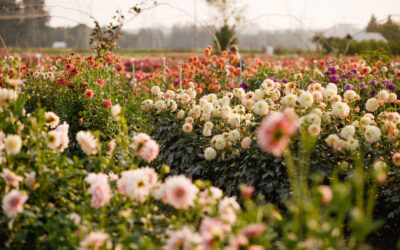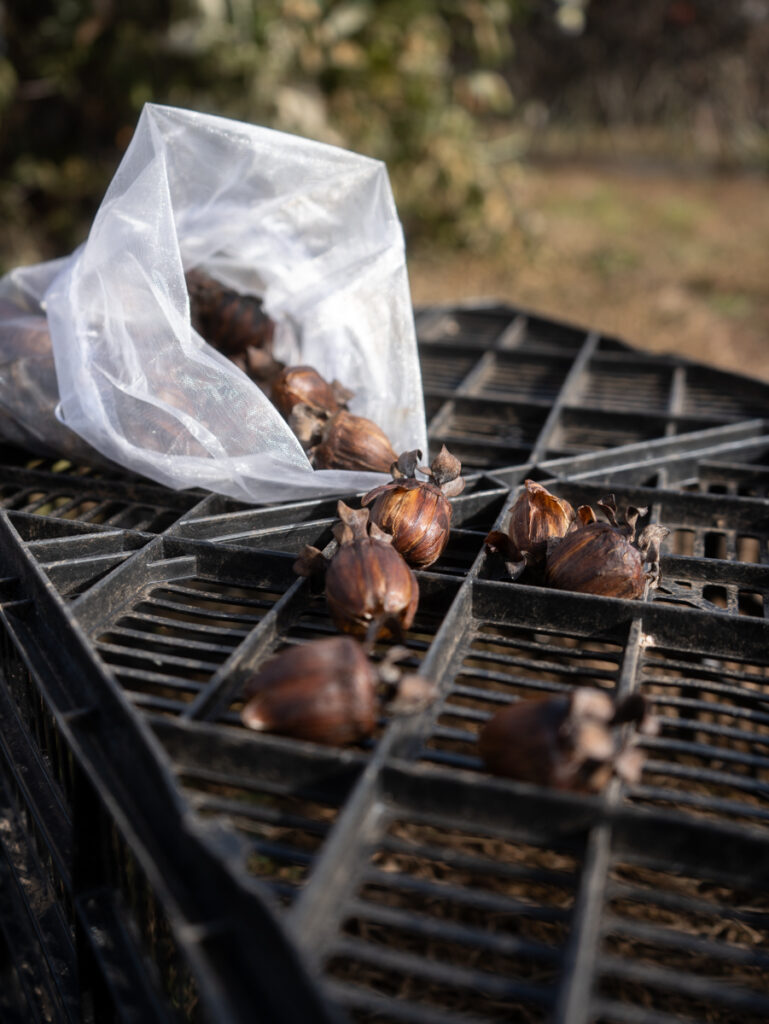
It’s almost October, and we’ve been busy collecting dahlia seeds here at Triple Wren. We find it endlessly exciting to think about what might be waiting inside those little seed heads!
The collection of dahlias we’ve chosen to grow together gives us a unique mix of genetic possibilities. When we allow pollinators to do their work, they combine the dahlias available into beautiful new combinations and amazing flowers appear from the seeds we collect.
Are you interested in going on this adventure too? Let’s save some dahlia seeds!
First, an overview:
We’ve made a quick video showing how we collect and save dahlia seeds here on the farm. If you’re giving seed saving a try this year, we’d suggest watching it and then checking out our 4 favorite seed-saving tips below before heading out into your garden.
While the process is fairly simple, we’ve learned a few things over the years that can make a big difference in your success, especially when autumn weather doesn’t cooperate!

Four helpful seed-saving tips:
1. Give your seed heads time to mature.
We generally begin leaving some of our blooms to set seed about six weeks before our expected first frost date. This gives the seed heads approximately four to five weeks to mature in the field, although the exact timing depends on the variety + your growing conditions.
You don’t have to stop harvesting ALL your flowers to do this! Just leave a few blooms on the plants you’d like to collect seeds from, and keep enjoying bouquets from the rest. If you’re getting a late start this year, look for seed heads that have already begun developing.
2. Don’t panic when it rains!
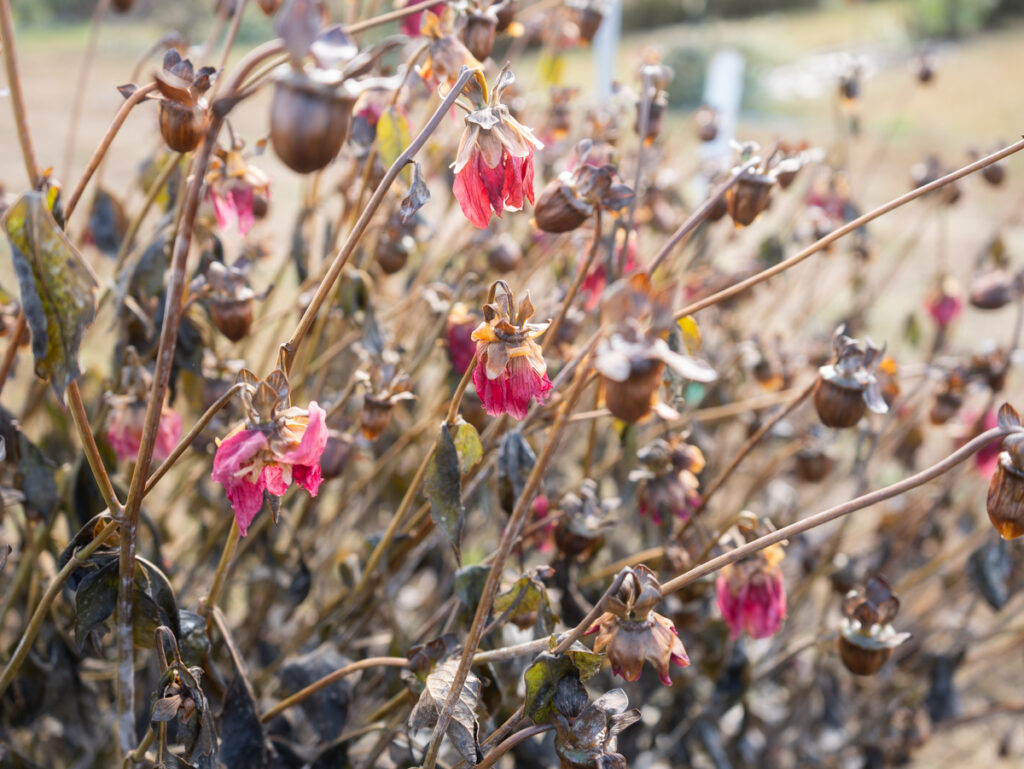
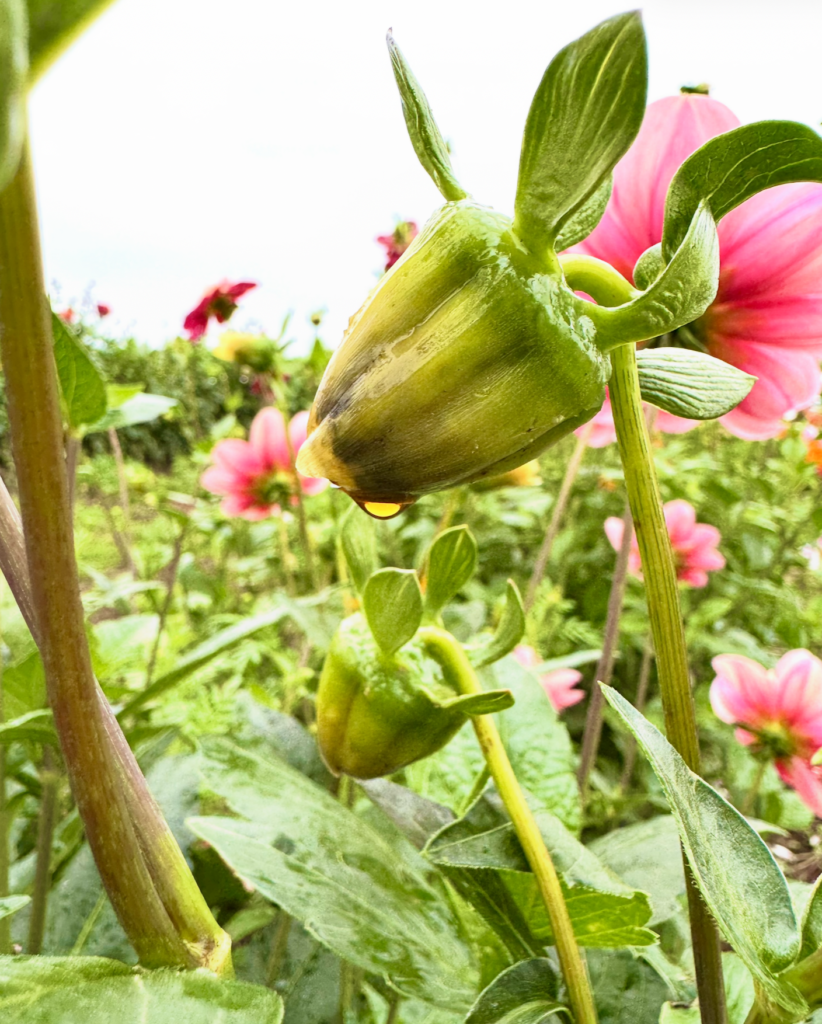
As dahlia blooms fade, their seed heads generally begin to point downward, and the sepals close around the developing seeds (image to right). This position allows moisture to drain from the seed head.
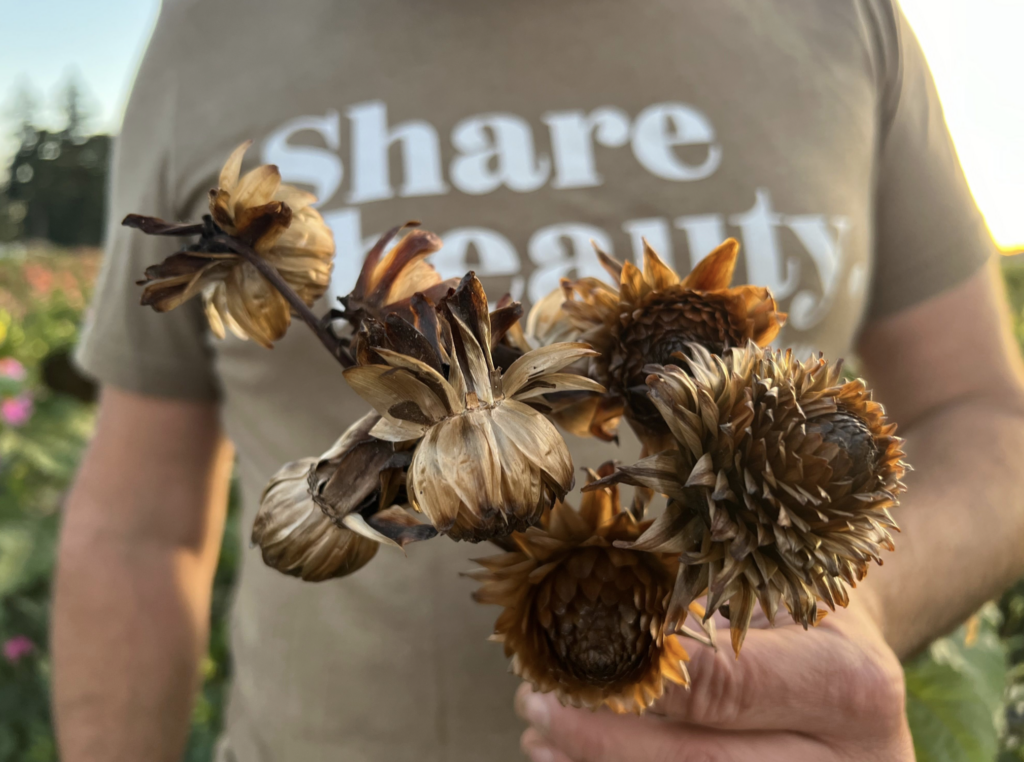
We prefer to leave ours in the field as long as possible, especially when we’re getting occasional sunny days between autumn rainstorms. They dry best with plenty of sunshine and airflow, and will usually ripen nicely on the plant. You know a seed pod is completely ripe when it’s dry and papery.
Eventually, if left in the field, seed pods will re-open to disperse the newly ripened seeds (see different stages of very ripe/dry seed pods below).
3. Know when to bring your seeds inside.
If you’re expecting an early frost, you may want to bring your developing seed heads indoors. We’ve successfully collected seeds from frost-nipped and even green seed heads, provided they’ve developed sufficiently and their sepals have closed.
The two things we pay particular attention to when bringing them indoors are: airflow and position. We like to place our seed heads in organza bags, which help contain the seeds while allowing air to circulate. If we’re bringing in green seed heads, we keep their stems upright so the heads remain in their original downward-facing position and can continue draining. Good airflow is especially important for preventing mold and rot.
4. Make sure your seeds are completely dry before storing them.
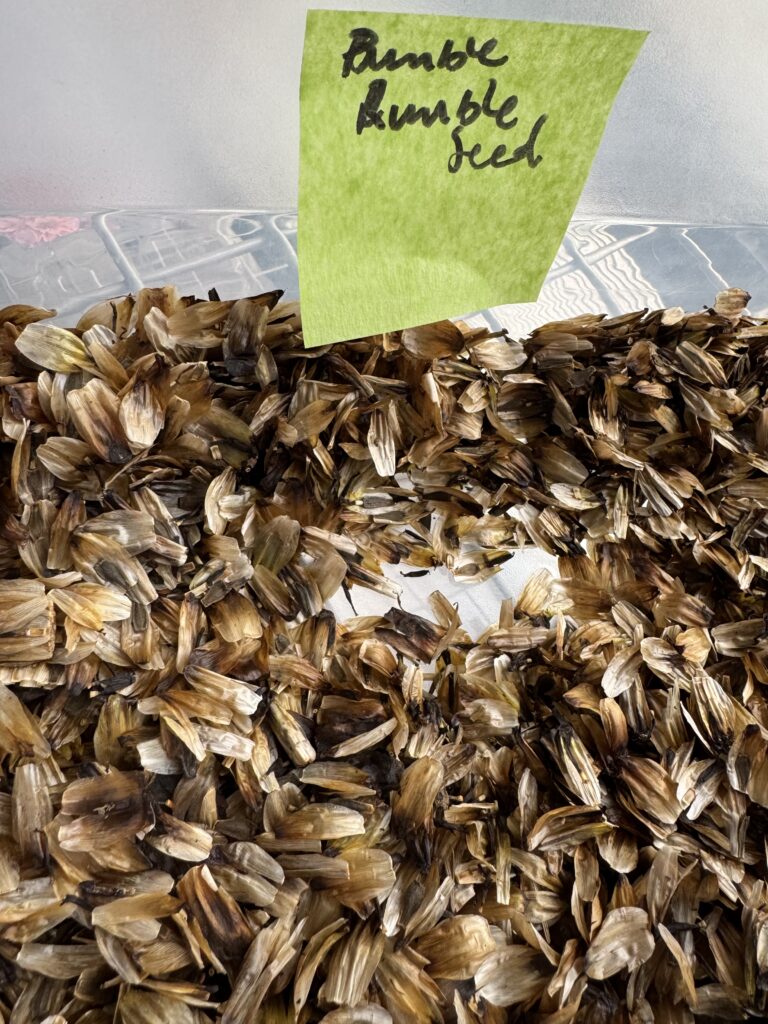
Once your seeds have finished drying, remove the remaining chaff and store them in labeled containers somewhere cool and dry, away from sunlight and moisture.
If you want to keep track of your seed-parents, labeling will allow you to know some genetic history on next year’s blooms! Because yes–if you plant the seeds you save in late winter or even next spring, they’ll grow and bloom into unique, new flowers in your garden next summer, with tuber clumps you can save to grow on copies of your new creation year after year!
Want to learn more?
There are a few other questions we hear regularly, particularly about saving seeds from fully double dahlias, how to grow dahlias that look a specific way, and what comes next after you grow a dahlia you particularly love.
We’ve also gathered our seed-saving resources in one place so you can find the information you need.